

Welcome! This overview briefly describes and defines the Toolkit structure, formats, categories, and tags.
Orientations
Orientations are practical guidelines for how to implement this toolkit in your workplace or classroom. They can prompt ideas about how to apply specific activities and resources for your situation.
Orientations have been written and revised by members of the Core Design Group and the Design for Diversity Grant Team.
Materials
This Toolkit collects and annotates different types of resources, gathered or commissioned between 2016 and 2018.
Study paths then combine these resources with learning activities for use in a workplace or classroom.
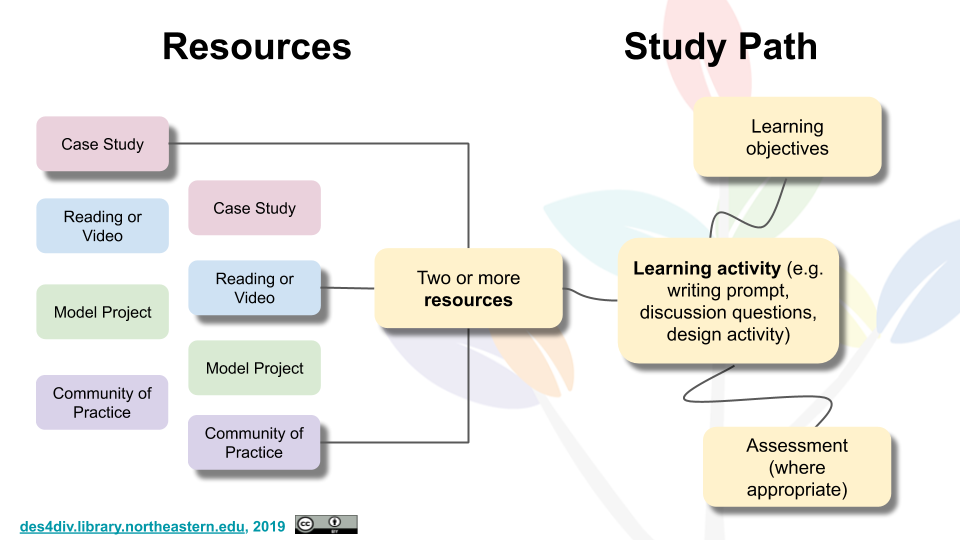
Case studies and study paths were created specifically for this Toolkit, and we are very grateful to our authors.
Organization
These materials have been organized using three sets of categories:
- Topic: eight cross-cutting themes iteratively developed with the D4D community
- Format: the different types and genre of material
- Community of Focus: categories that attempt to make explicit the roles of race, gender, sexuality, ability status, ethnicity, religion, language, and other identifying traits in these materials
